
Epoxy Flake vs Plain Colour: Which to Choose

Once you have decided to epoxy your garage floor, the next choice is the look: decorative flake or solid plain colour. Both are tough, both are easy to clean, and both use the same core epoxy system. The difference is mostly about appearance, grip and how forgiving the finish is. Here is how to choose.
Epoxy flake floors
A flake floor is made by broadcasting coloured vinyl chips into the wet epoxy, then sealing them under a clear top coat. It is the classic "showroom garage" look.
Pros:
- Hides imperfections, dust and minor slab flaws extremely well.
- The flake texture adds natural slip resistance underfoot.
- Highly customisable - blend flake colours to match any look.
- Scratches, tyre marks and dirt are far less visible day to day.
Cons:
- Slightly more work to apply (you broadcast flakes and usually add a top coat).
- The textured surface takes marginally more effort to mop than a smooth one.
Plain colour epoxy floors
A plain colour floor is a smooth, solid coat of coloured epoxy - clean, modern and uniform.
Pros:
- The smoothest possible surface - very easy to sweep and mop.
- Clean, minimalist look that suits modern garages and workshops.
- Slightly simpler to apply since there are no flakes to broadcast.
Cons:
- Shows dust, tyre marks and scratches more readily than a flake floor.
- A smooth coat can be slippery when wet unless you add an anti-slip additive.
- Slab imperfections telegraph through more, so prep needs to be neat.
Which is more forgiving for a first-time DIYer?
This is the part most comparisons skip, and for a DIY install it matters as much as the look: flake is the more forgiving finish to apply. The broadcast flakes visually break up the surface, so minor roller marks, slightly uneven film build and small slab imperfections simply disappear into the pattern. A plain colour floor is one smooth, uniform sheet - which looks superb, but shows exactly what the roller did. If your slab is older or patched, or this is your first epoxy job, flake hides the learning curve; plain colour rewards a tidy slab and a steady technique.
| For a DIY applicator | Flake | Plain colour |
|---|---|---|
| Hides roller marks and uneven build | Yes - flakes break up the surface | No - a smooth coat shows technique |
| Hides patched or imperfect slabs | Very well | Best on tidy slabs |
| Extra steps | Broadcasting flakes + scrape and vacuum before top coat | None - roll and done |
| Day-to-day marks (dust, tyres) | Barely visible | More visible |
Which should you choose?
Choose flake if you want the most forgiving, best-looking, lowest-maintenance result and you do not mind a little extra effort during application. It is the most popular choice for home garages for good reason.
Choose plain colour if you want the cleanest, smoothest finish, prefer a uniform modern look, or plan to add your own anti-slip additive for wet areas.
A note on grip
Whichever you pick, if the floor will get wet - washing the car, rain blowing in - consider an anti-slip additive in the top coat. Flake floors have some texture built in; plain floors benefit most from it.
Still not sure? Both options are available as complete kits. Compare our garage floor epoxy kits - flake and plain colour systems, Australian-made, with everything you need in one order.
Related guides
Keep reading

Bunnings Garage Floor Epoxy Compared: What You Get, and What’s Missing
Short answer: Bunnings sells several garage floor coatings from about $120 to $380, and two of them (Rust-Oleum...
Read guide
Is DIY Epoxy Flooring Worth It? DIY Kit vs Pro (Australia)
A DIY epoxy kit costs around $499-$729 delivered and a professional install runs $2,000-$4,500 - so DIY saves...
Read guide
Garage Floor Paint vs Epoxy: Which Coating Actually Lasts?
Garage floor paint is a single-part product that dries into a thin film sitting on top of the...
Read guide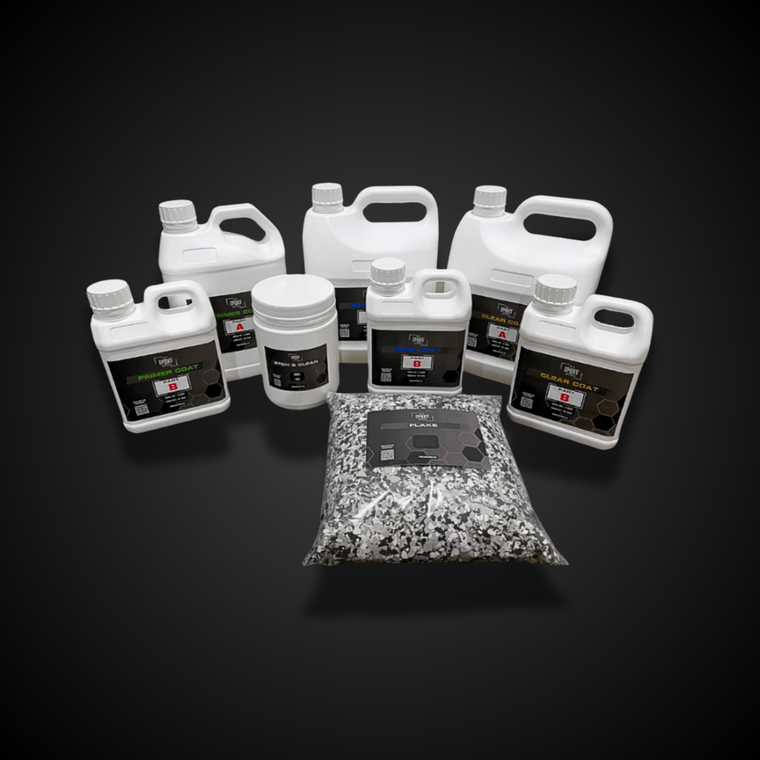
DIY Epoxy Flake Floor Kit – Garage & Concrete Coating
Everything in one box - etch, prime, colour, flake and clear - matched to your garage, with a step-by-step guide and real phone support.